


Spider Fuser: Hero Simulator
4.4329.00 Reviews
App Specs
- Version
- 2.04
- Updated On
- License
- Free
- Downloads
- 1,000,000+
- Developer
- R-USER Games
- Categories
- Action
- Platform
- Android
Screenshots
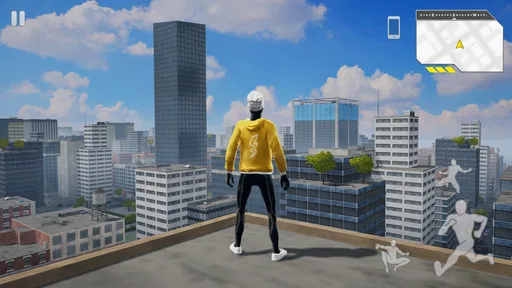
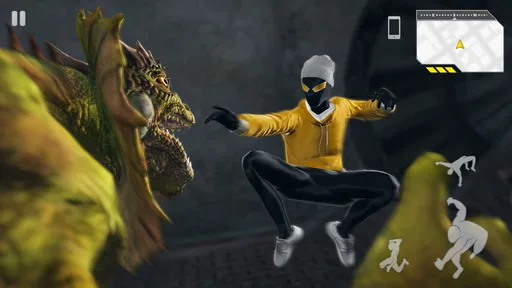
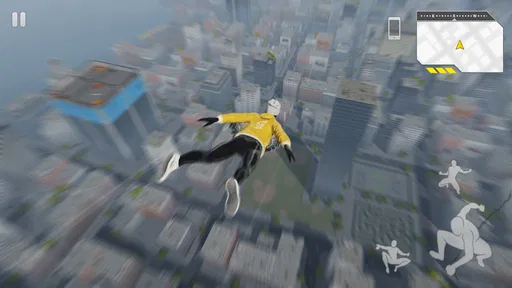
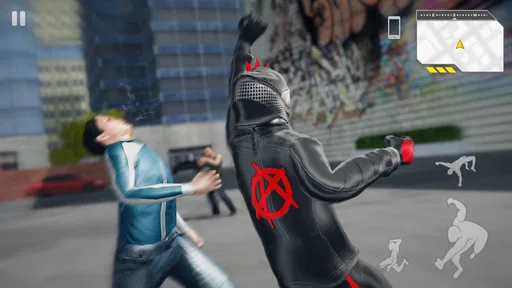
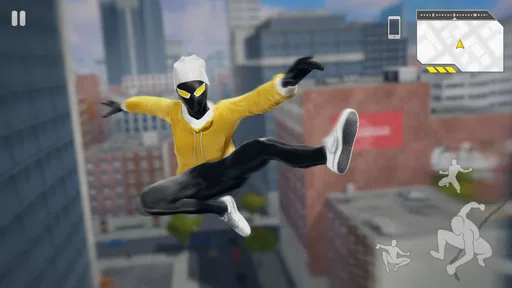
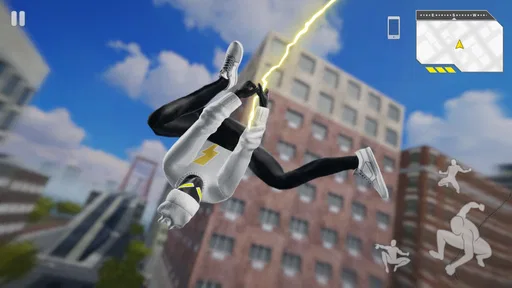
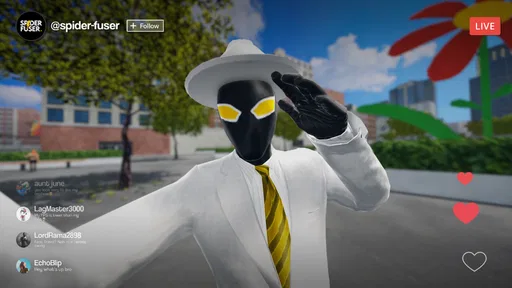
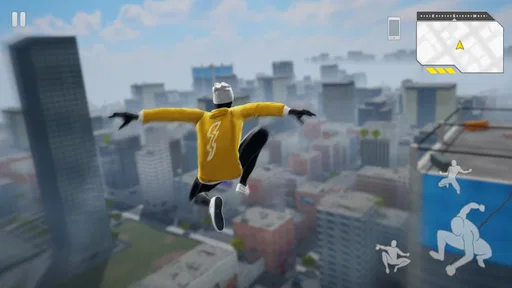
 Analysis by AppCompare
I spent time with Spider Fuser: Hero Simulator as an action game built around a superhero fantasy: moving through a city, using web-swinging movement, and responding to trouble as it appears. Its central appeal is easy to understand, but the important question is whether that idea remains enjoyable after the novelty of swinging through Starfall City wears off. My impression is that it can be a fun, accessible choice for players who want a free superhero-themed experience, especially when they prefer short sessions and movement over complicated strategy.
The game comes from R-USER Games and is available at no purchase price. That makes the decision straightforward: you can try it without paying for access, so the main investment is your time and attention. I would still separate “free to start” from guaranteed long-term value. The confirmed price is free, while details such as optional purchases or advertising should not be assumed from that fact alone. For me, the strongest reason to try it is precisely that there is no entry cost attached to the listed version.
It is rated for Teen players, which is worth keeping in mind before handing it to a younger child. The Android requirement is version 7.1 or later, so the compatibility threshold is relatively approachable for people using older supported devices. The current version is 2.04, and the game was released on September 20, 2025. Those details help place it as a recent mobile release rather than an old title being rediscovered years later.
How the superhero simulator feels in everyday play
The first thing I noticed is that the swinging concept gives the game a clear identity. Many mobile action games begin with running, shooting, tapping enemies, or repeating compact arena battles. Here, the fantasy is more physical: I am meant to feel like a hero crossing a city rather than simply selecting missions from a menu. Starfall City is therefore more than a backdrop. It is the space that makes the movement feel meaningful.
That distinction matters because the quality of a superhero simulator depends heavily on how satisfying travel feels between objectives. If moving from one point to another is enjoyable, even a simple task can feel like part of the adventure. If movement becomes awkward or repetitive, the same city can start to feel like a corridor with scenery around it. I found myself judging each session less by the story premise and more by whether the swinging, turning, and landing created a reliable sense of control.
My practical advice is to give the controls a few minutes before deciding whether the game suits you. A player who expects instant precision may find the early movement less natural than a traditional platformer or a familiar action game. Rather than rushing through the opening, I would use the first session to learn how much momentum to carry, when to release, and how to approach streets or buildings without overcorrecting. That small adjustment can make the difference between feeling like a hero and feeling like a character being dragged around by the controls.
The city setting also changes how I think about short play sessions. I can imagine opening the game during a commute, after school, or while waiting for an appointment, completing a little patrol-style activity, and closing it without needing a long uninterrupted campaign. That is a genuine strength for mobile play. The game’s premise is immediately readable, so I do not need to remember a complicated set of systems every time I return.
Worth Reading Before You Choose

EA SPORTS FC Mobile 26 Is a Bigger Football Game, but It Takes Time

Flipboard Shows What News Apps Must Do Beyond the Feed

Switching to Android Auto Means Rethinking Your Driving Routine

Google Calendar Makes a Crowded Week Easier to Manage

Ludo King Makes the Most of the Minutes Between Plans

Baby Panda World Brings Quick Play to Modern Phones, but Its Game Library Feels Busy
At the same time, players looking for a deep role-playing system should be cautious. The verified description presents a superhero journey and city protection, but it does not establish a large character-building framework, an extensive narrative campaign, or a competitive multiplayer mode. I would not choose this expecting the breadth of a console superhero adventure. Its value is more likely to come from the moment-to-moment fantasy of being mobile in a city.
What makes the free access worthwhile
Because the listed price is free, I judge the game by a different standard from a premium release. I do not need it to replace a large paid adventure. I need it to offer a pleasant reason to return, controls that are understandable, and enough variety in the superhero routine to justify keeping it installed. On that basis, the concept has a sensible starting point: the player can test the central movement and city-protection idea before deciding whether it deserves more time.
The public response is encouraging without being a guarantee of personal enjoyment. The game has an average rating of 4.4 from around 32 thousand ratings, with more than 300 written reviews and over a million installs. I read those figures as evidence that the premise has reached a substantial audience, not as proof that every device, control preference, or play style will receive the same experience. A popular free game can still be the wrong fit for someone who dislikes open movement or prefers carefully structured levels.
One useful way to evaluate it is to ask what you want from your next mobile session. If you want a quick superhero mood, a recognizable city fantasy, and a game that does not require a purchase before trying it, this title has a clear advantage. If you want a tightly balanced action challenge with detailed enemy behavior, exact platforming, or a long story that carries every session forward, you may find the free entry point less important than the limitations of the format.
I also like that the game’s basic promise can be understood without a tutorial manual. “Swing through the city and protect it” is a simple loop, but simple does not automatically mean shallow. A good movement loop can support repeated play when the player enjoys improving routes and handling. My more advanced approach would be to stop treating every trip as a straight line. I would experiment with different approaches to the same area, using height, direction changes, and landing choices to make movement feel like a skill rather than a button press.
Small decisions that improve the experience
My first concrete tip is to avoid judging the game solely by the fastest route. In a superhero game, speed is only one part of the fantasy. A route that gives better control, a cleaner landing, or a more dramatic view can be more satisfying than one that saves a few seconds. This is especially useful for players who find the movement system initially slippery: choosing a safer line lets you learn the city without turning every mistake into frustration.
My second tip is to treat each session as a focused patrol rather than trying to force a marathon. Mobile action games often feel better when the player stops after a satisfying objective instead of continuing until the controls feel tiring. With this game, I would begin by setting a small personal goal: reach a particular part of Starfall City, complete a protection task, or practice a movement pattern. That approach makes the free format feel intentional and helps reveal whether the core loop has enough pull for you.
A third insight is that the game may appeal more to players who enjoy movement mastery than to players who mainly want combat depth. The superhero label can create expectations of elaborate battles, but the most distinctive idea attached to this title is swinging through the city. I would therefore pay attention to whether traversal itself remains enjoyable. If it does, the game can deliver value even during quieter moments. If it does not, the setting alone may not be enough to keep you playing.
There is also a practical device question. The minimum operating system is Android 7.1, but compatibility is not the same as identical performance on every phone. I would install it on the device I actually plan to use and test the controls, visual smoothness, and comfort before committing to longer sessions. That is particularly important for movement-focused games, where even minor input delay or an uncomfortable layout can affect the whole experience. I would not infer hardware performance from the operating-system requirement alone.
Where the tradeoffs become noticeable
The biggest tradeoff is between immediate accessibility and long-term depth. The premise is friendly to newcomers because it does not require knowledge of a complicated universe. However, a straightforward superhero loop can become repetitive if the city-protection activities do not keep changing in meaningful ways. Since I cannot treat unlisted systems as confirmed features, I would approach the game expecting the central fantasy to do most of the work rather than assuming a broad collection of modes.
Another tradeoff is control freedom versus precision. Swinging through a city sounds liberating, but mobile touch controls must translate that freedom into a small screen. Players who enjoy improvising may appreciate the sense of movement, while players who want exact jumps and perfectly predictable trajectories may need patience. I found it more useful to adapt my timing than to fight the controls. Still, that adaptation is a real part of the cost, even when the monetary price is free.
The Teen age rating should also influence expectations at home. Parents may want to check the game themselves before allowing a younger player to use it, especially if the child is sensitive to action themes. The rating does not tell me that the game is unsuitable for every younger player, but it does make it inappropriate to describe it as a universal children’s game. For families, the sensible approach is to consider both the age guidance and the child’s tolerance for superhero conflict.
I would also avoid comparing it too directly with large, paid superhero games. A premium console or PC title may offer more elaborate storytelling, bigger environments, richer combat, and a more controlled presentation because it is built for different hardware and a different business model. Spider Fuser: Hero Simulator competes more naturally with other free mobile action games that promise quick access and a strong central gimmick. Against those alternatives, its city-swinging identity is more important than feature count.
There is a second comparison worth making with endless runners. An endless runner usually emphasizes reflexes, lane changes, and repeated forward motion. This game’s superhero fantasy suggests a more spatial relationship with the city: height, direction, and arrival matter more than simply surviving a straight path. If you want a quick score-chasing reflex test, an endless runner may be cleaner. If you want to feel responsible for moving through a place, this title has the more appealing premise.
Who should install it and who should pass
I would recommend trying it to superhero fans who enjoy the feeling of travel as much as the destination. It is also a reasonable pick for someone who wants a free action game with an immediately understandable setting. The absence of an upfront price makes experimentation easy, and the million-plus install milestone shows that the game has already attracted a sizable mobile audience. I would especially suggest it to players who like learning a movement system gradually instead of demanding perfect control in the opening minute.
It may also suit people who need a game that can fit around ordinary life. Imagine having ten minutes before a train arrives: you can open the game, move through part of Starfall City, handle a small piece of the hero routine, and leave. The appeal in that scenario is not a massive plot reveal. It is the ability to enter a recognizable fantasy quickly and leave without feeling that you abandoned a complicated strategy session.
I would skip it if your priority is a deep, story-heavy superhero role-playing experience. I would also look elsewhere if you dislike touch-based movement, become frustrated by learning momentum, or need a highly competitive action system with carefully documented balance. A free game is not automatically good value when its central interaction is the exact thing you do not enjoy. In that case, a premium action title or a more traditional platformer would be a better use of your time, even if it costs money.
Players with older Android phones should install it carefully rather than assuming the minimum operating-system figure guarantees a perfect experience. The supported system version makes the game accessible to more devices, but actual comfort still depends on the handset and the player’s tolerance for visual or input differences. I would test a short session first, keep the controls at a comfortable size, and avoid deciding based only on screenshots or the superhero theme.
My buy-or-skip verdict
For me, Spider Fuser: Hero Simulator is worth trying because the price removes the biggest barrier and the swinging-through-a-city idea gives it a specific personality. I would not call it an automatic recommendation for every action fan. Its success depends on whether the movement remains enjoyable after the first impression, and that is a very personal test. The game is at its best when I approach it as a compact superhero patrol rather than as a replacement for a large blockbuster adventure.
The value judgment is therefore simple. You are not paying an upfront purchase price, so the sensible choice is to install it, spend a focused session learning the movement, and decide whether the city feels fun to navigate. Do not commit because of the rating alone, and do not reject it because the premise sounds simple. Let the controls answer the question. If swinging, arriving, and protecting Starfall City give you a satisfying rhythm, the free access makes continued play easy to justify.
My final recommendation is a qualified yes for casual action players, superhero enthusiasts, and anyone curious about a movement-led mobile experience. I would keep expectations measured, remember the Teen rating, and compare it with alternatives based on what you value: quick free access and city traversal here, or deeper story and precision elsewhere. For the right player, that is enough to make this a pleasant addition to a mobile library; for someone seeking a complete superhero epic, skipping it will probably be the better decision.
Pros
- Simple controls make the game easy to pick up.
- Short missions fit well into quick gaming sessions.
- Hero upgrades add a sense of steady progression.
- Colorful visuals give the action a lively comic-book feel.
- Offline play is useful when you have no internet access.
Cons
- Repeated objectives can make later missions feel predictable.
- Some upgrades may require considerable grinding to unlock.
- Combat can become chaotic when several enemies attack at once.
- The game may feel shallow for players seeking a deeper story.
- Ads or optional purchases can interrupt the overall experience.
FAQs for Spider Fuser: Hero Simulator
What is Spider Fuser: Hero Simulator?
Spider Fuser: Hero Simulator is an action-focused mobile game built around superhero-style movement, combat, and missions. Players control a spider-inspired hero, travel through different areas, fight enemies, and use special abilities to complete objectives. The game is designed for short, accessible sessions, making it suitable for players who enjoy casual fighting, web-slinging mechanics, and simple progression rather than a complex story-driven adventure.
How does the gameplay work in Spider Fuser: Hero Simulator?
The gameplay combines exploration, obstacle navigation, and combat. You guide the hero through the environment, attack opponents, avoid hazards, and use available powers to overcome challenges. Controls are generally created for touchscreens, so the experience is easy to start on Android or iOS. As you progress, missions may become more demanding, requiring better timing, movement, and strategic use of the hero’s abilities.
Is Spider Fuser: Hero Simulator free to download and play?
Spider Fuser: Hero Simulator can generally be downloaded without an upfront purchase, allowing users to try its core gameplay before spending money. However, availability of advertisements, optional in-app purchases, upgrades, or other paid features may depend on the version and platform. Before downloading, it is worth checking the official store listing for current pricing information, age ratings, permissions, and any details about purchases.
Does the game require an internet connection?
The need for an internet connection can vary depending on the game version and the feature being used. Basic gameplay may work offline in some cases, while advertisements, cloud-related functions, updates, or certain online services may require connectivity. If you plan to play while traveling or without mobile data, test the game after installation and review its store description for the latest offline-play information.
Is Spider Fuser: Hero Simulator suitable for children?
The game may appeal to younger players because of its superhero theme, straightforward controls, and action-based missions. Nevertheless, parents should review the official age rating and examine the game’s advertising, violence level, chat features, and optional purchases before allowing children to play. It is also advisable to activate parental controls and supervise spending, especially if the app includes advertisements or in-app purchase options.


